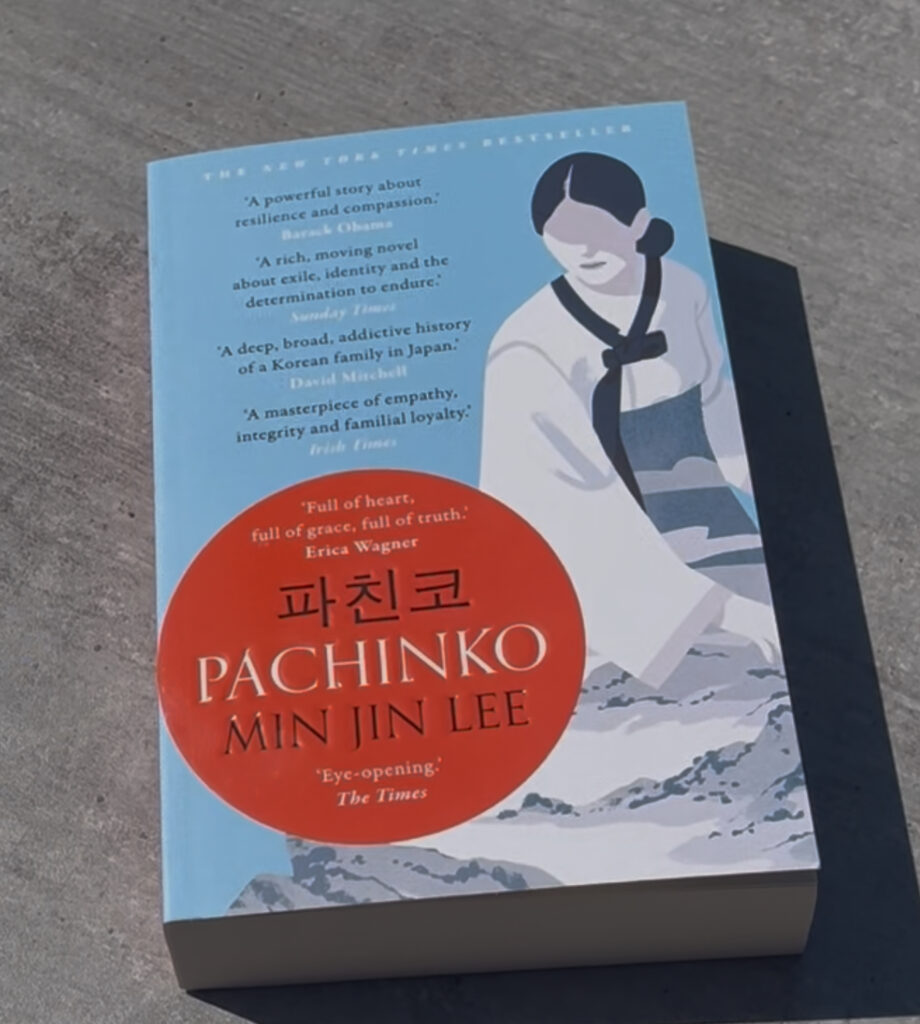
Yeongdo, Korea 1911. In a small fishing village on the banks of the East Sea, a club-footed, cleft-lipped man marries a fifteen-year-old girl. The couple have one child, their beloved daughter Sunja. When Sunja falls pregnant by a married yakuza, the family face ruin. But then Isak, a Christian minister, offers her a chance of salvation: a new life in Japan as his wife. Following a man she barely knows to a hostile country in which she has no friends, no home, and whose language she cannot speak, Sunja’s salvation is just the beginning of her story. Through eight decades and four generations, Pachinko is an epic tale of family, identity, love, death and survival.
Sunja’s story, and that of the subsequent generations, is a story about discrimination both within and between societies, survival, identity and family. And the effects that are felt across the generations, manifesting themselves in unexpected ways. Like all good historical fiction you emerge from the novel with your curiosity piqued, wanting to know more about the experiences of displaced Koreans living in Japan, the history and tensions of the region and the fascinating world of pachinko – looked down upon by many but hugely popular and economically impossible to ignore. Very well-written, very readable, and with well crafted main characters – but perhaps a few too many characters introduced towards the end that distracted from the main narrative if we are being picky. Overall a fascinating, enlightening and enjoyable read. With a score of 8.2/10 it’s our second highest scoring book of the year.